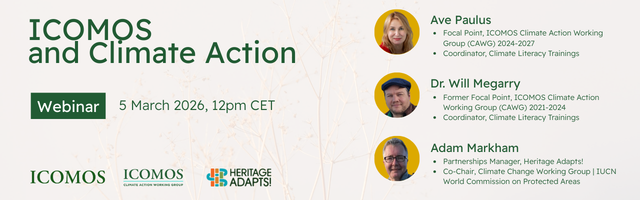
Climate change remains a priority for the heritage sector; however, a lack of tools and resources have left many feeling powerless. Since 2016, the ICOMOS Climate Action Working Group (CAWG) has led efforts to address this challenge. Through projects and collaborations, it has supported the development of new methodologies, toolkits and educational resources.
This webinar will focus on two such efforts. These are the ICOMOS CAWG Climate Literacy Trainings and the Preserving Legacies Heritage Adapts campaign, where ICOMOS is a leadership partner.
Climate Action Working Group is building capacities, networks and developing policy messages that highlight the contributions of cultural heritage to climate action, including latest UNFCCC heritage-centric Plans To Accelerate Solutions (PAS) on the Global Climate Action Agenda – Heritage Adapts, Heritage Now and Heritage in National Adaptation Plans.
Climate Literacy Training for Heritage course is a set of resources designed to provide foundational climate knowledge for those in the heritage sector. Informed by CAWG studies and experience, it is designed to increase the confidence and ability of heritage professionals to engage in climate actions.
The Preserving Legacies Heritage Adapts campaign is a global initiative seeking to support 3,000 heritage places to take adaptation actions by 2030. Through online training and guidance customised for the heritage sector, the campaign promotes values-based and community-led adaptation actions.
This webinar will be of interest to anyone looking to engage in climate action, including ISCs, NCs, WGs. It is relevant to all heritage professionals.
On December 3-5, the Estonian Committee of the international expert organization for heritage conservation, ICOMOS, in cooperation with the ICOMOS Climate and Heritage Working Group, the ICOMOS European Energy Directive Working Group, the ICOMOS Energy Efficiency Scientific Committee, the Tallinn City Government, the Estonian Heritage Board, the Ministry of Culture, the Life HeritageHomes project team, heritage communities and several other partners, will organize a climate and heritage training program with open seminars. The training and seminars, which will take place in Tallinn and online, are aimed at heritage specialists and communities in Estonia and the European countries.
Link in Estonian
Inglisekeelne striim
This is a three-day program consisting of training and open seminar:
Climate Literacy Training for Cultural Heritage Experts on December 3rd from 9 am to 5 pm at the Statehood House and Zoom. In English
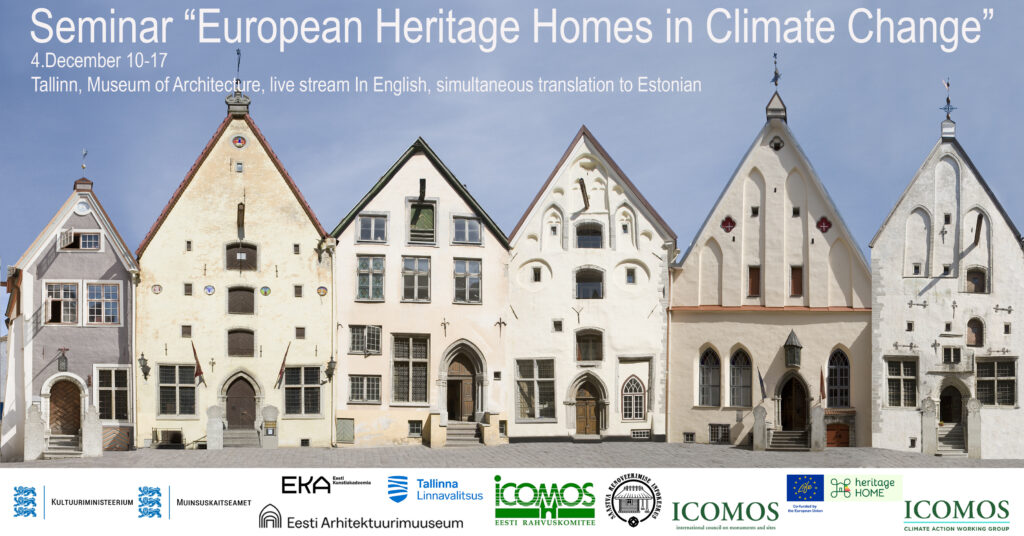
Open Seminar and Think Tank “European Heritage Homes in Climate Change” on December 4th from 10 am to 5 pm in the Tallinn Museum of Architecture and online. In English, simultaneous translation to Estonian.
Expert Study Tour in Tallinn Old Town and Kalamaja on December 5th
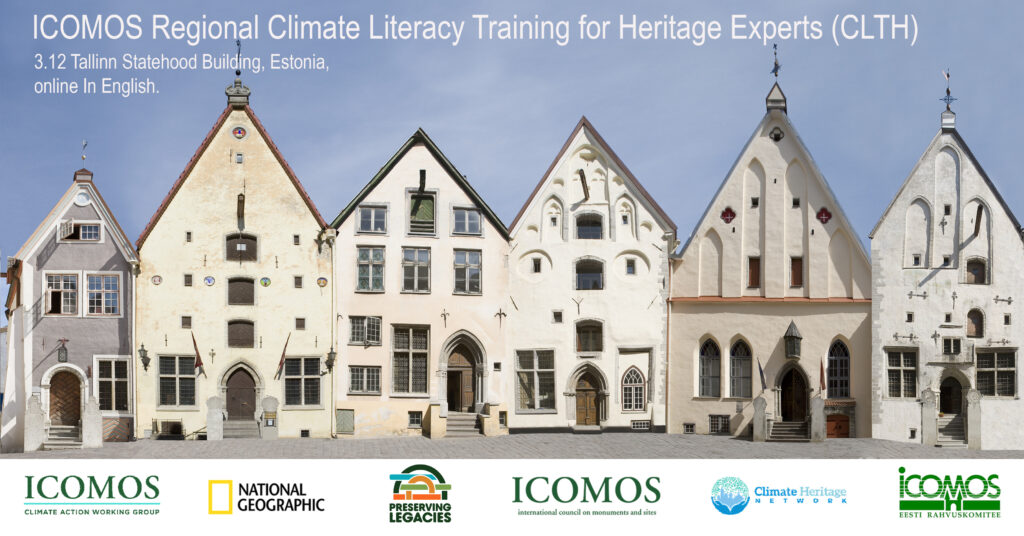
On December 3rd, ICOMOS Climate Literacy Training for Heritage Professionals (CLTH) will take place in the Statehood Building of Tallinn and online. In English.
ICOMOS Climate Literacy Training for Heritage Professionals (CLTH) builds on a resource designed by the ICOMOS Climate Action Working Group (CAWG) through the Preserving Legacies project funded by the National Geographic Society and aims to develop place- and cultural heritage-based climate adaptation actions, transforming conservation practice as a field to meet the challenges of the climate crisis.
The content of the CLTH is in line with key international documents, including the UNESCO Policy Document on Climate Action for World Heritage, the Paris Agreement on the United Nations Framework Convention on Climate Change, and is an important step towards achieving the goals of the Global Adaptation Goal, which calls on Parties to develop “adaptive strategies to preserve cultural practices and heritage sites and to build climate-resilient infrastructure, guided by traditional knowledge, indigenous knowledge and local knowledge systems”.
The climate literacy training for heritage professionals addresses key topics identified as baseline competencies for heritage professionals in the ICOMOS Future of our Pasts Report (2019).
These are:
Climate Science and Impacts – This module will introduce participants to climate change and how it impacts both the world and heritage.
Carbon Footprints and Vulnerability – This module will encourage participants to understand the carbon footprint of the heritage sector and introduce vulnerability and how it is assessed.
Adaptation and Mitigation – This module will encourage participants to consider their own, and heritage’s, contributions to climate action through sustainable adaptation and mitigation pathways
Climate Justice and Equity – This theme will be addressed throughout other modules and discusses the important topics of climate justice and equity, focusing on how we can ensure respectful and equitable interactions and engagement in climate action.
Additional modules include:
Climate Action for World Heritage
Climate Vulnerability of North European Cities and Landscapes
Training is held by Will Megarry, Ave Paulus and Scott Heron. The training is targeted to Nordic-Baltic heritage experts and ICOMOS members from Europe. The training will be held in English. The training materials will be translated later into Estonian. Registration link https://forms.gle/viFxHiDFzRyKac9i8 Contact: Ave Paulus, ave.paulus@icomos.org
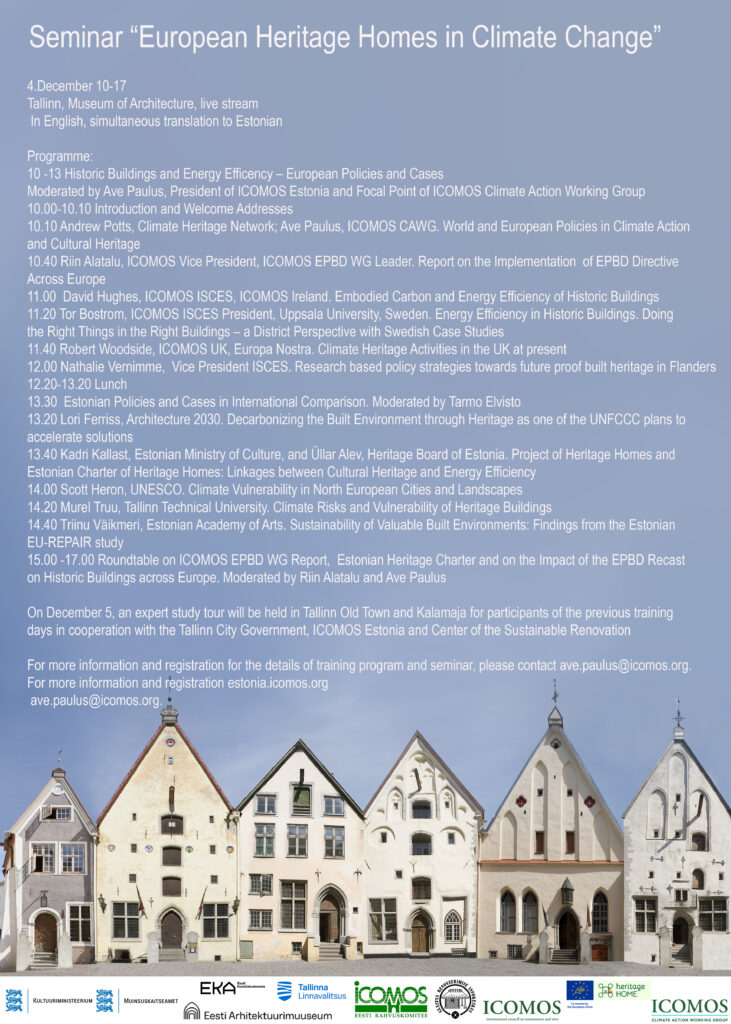
On December 4, an open seminar “European Heritage Homes in Climate Change” will be held in Tallinn Museum of Architecture and online. In English, simultaneous translation into Estonian
The importance of European historic buildings in achieving climate goals is a central topic in the world and in Europe in light of the Energy Directive, and this is also the main topic of the open seminar to be held on December 4. Speakers from Europe will present the experiences of different countries in achieving climate goals for historic buildings, including examples from Great Britain, Ireland, Belgium, and Estonia. We will present the results of the ICOMOS EPBD working group on European experience in implementing the Energy Efficiency Directive. Climate and heritage guidance material is being compiled within the framework of the Estonian Heritage Homes project. We will discuss the guidance materials for historic buildings prepared by this project and the preparation of a heritage charter. The seminar, which will be held with the participation of well-known European experts, is a good opportunity for international cooperation on heritage and climate issues in Estonia. We invite all those involved in historic buildings to participate and contribute to the discussion. The seminar will be held in a hybrid format. The working language of the seminar is English, with simultaneous interpretation in Estonian.
Programme/programm:
10 -13 Historic Buildings and Energy Efficency – European Policies and Cases
Moderated by Ave Paulus, President of ICOMOS Estonia and Focal Point of ICOMOS Climate Action Working Group
10.00-10.10 Introduction and Welcome Addresses
10.10 Ave Paulus, ICOMOS CAWG. World and European Policies in Climate Action and Cultural Heritage
10.40 Riin Alatalu, ICOMOS Vice President, ICOMOS EPBD WG Leader. Report on the Implementation of EPBD Directive Across Europe
11.00 David Hughes, ICOMOS ISCES, ICOMOS Ireland. Embodied Carbon and Energy Efficiency of Historic Buildings
11.20 Tor Bostrom, ICOMOS ISCES President, Uppsala University, Sweden. Energy Efficiency in Historic Buildings. Doing the Right Things in the Right Buildings – a District Perspective with Swedish Case Studies
11.40 Robert Woodside, ICOMOS UK, Europa Nostra. Climate Heritage Activities in the UK at present
12.00 Nathalie Vernimme, Vice President ISCES. Research based policy strategies towards future proof built heritage in Flanders
12.20-13.20 Lunch
13.30 Estonian Policies and Cases in International Comparison. Moderated by Tarmo Elvisto
13.20 Lori Ferriss, Architecture 2030. Decarbonizing the Built Environment through Heritage as one of the UNFCCC plans to accelerate solutions
13.40 Kadri Kallast, Estonian Ministry of Culture, and Üllar Alev, Heritage Board of Estonia. Project of Heritage Homes and Estonian Charter of Heritage Homes: Linkages between Cultural Heritage and Energy Efficiency
14.00 Scott Heron, UNESCO. Climate Vulnerability in North European Cities and Landscapes
14.20 Murel Truu, Tallinn Technical University. Climate Risks and Vulnerability of Heritage Buildings
14.40 Triinu Väikmeri, Estonian Academy of Arts. Sustainability of Valuable Built Environments: Findings from the Estonian EU-REPAIR study
15 -17 Roundtable on ICOMOS EPBD WG Report, Estonian Heritage Charter and on the Impact of the EPBD Recast on Historic Buildings across Europe. Moderated by Riin Alatalu and Ave Paulus
On December 5, an expert study tour will be held in Tallinn Old Town and Kalamaja for participants of the previous training days in cooperation with the Tallinn City Government, ICOMOS Estoniaand Center of the Sustainable Renovation
For more information and registration for the details of training program and seminar, please contact ave.paulus@icomos.org.r, please contact ave.paulus@icomos.org.
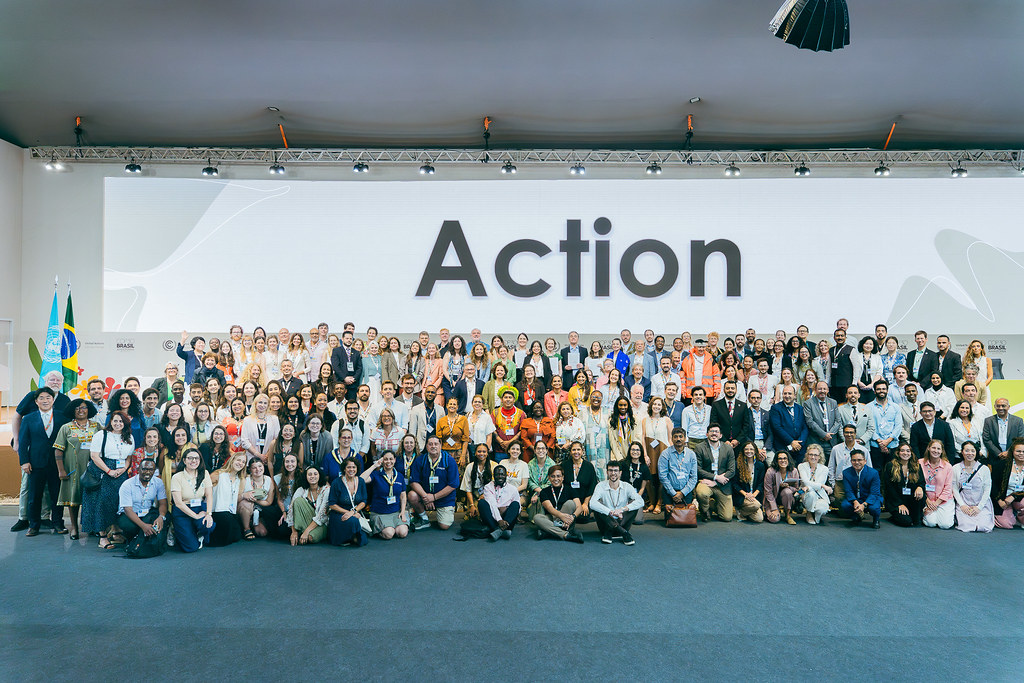
ICOMOS took part in the 30th United Nations Climate Change Conference (COP30), which was held from 10-21 November 2025 in Belém, Brazil, to reaffirm its commitment to climate action within heritage conservation practices. ICOMOS has been active both in advocating for the inclusion of cultural heritage in climate policies and in implementing cultural heritage-based climate action in the agenda, in strong partnerships with Climate Heritage Network, Preserving Legacies, Architecture 2030, the Group of Friends of Culture-Based Climate Action, and several cultural coalitions.
Highlights outcomes:
For the first time in the 33 year history of the UNFCCC, culture and heritage have been operationalized in international climate policy. Following two years of tireless advocacy by HACA and building on the work of the Climate Heritage Network, which began at COP26, the Global Goal on Adaptation (GGA) decision taken at COP30 makes clear that culture and heritage must be included in every dimension of adaptation, at every level.
Involved in 3 heritage-centric Plans To Accelerate Solutions (PAS) on the Global Climate Action Agenda, ICOMOS reaffirmed its commitment to climate action within heritage conservation practices through the involvement of its members and partner projects within #COP30 events.
Icomos Climate Action Working Group Focal Point Ave Paulus was involved in a total of 10 COP30 events and side events on topics such as climate resilience, culture-based solutions, cultural heritage and community protection in the face of #ClimateChange.
The Preserving Legacies project, of which ICOMOS is primary partner, received the 2025 Local Adaptation Champions Award for its community-driven work in the field of cultural heritage. Additionally, the Heritage Adapts to Climate Alliance (HACA) initiative announced the 2026 launch of its 3000 x 2030 Campaign, with ICOMOS acting as a lead partner.
Belém, Brazil (24 November 2025) – Upon the conclusion of COP30, the HeritageAdaptstoClimateAlliance (HACA) and the HeritageAdapts!3000x2030 Coalition Steering Group jointly hail the historic advances in putting culture and heritage at the heart of climate adaptation secured in Belém. COP30 also saw the historic announcement of the 2026 launch of the Heritage Adapts! 3000 x 2030 campaign to seize this momentum and support the adaptation of heritage sites and cultural practices in every community.
For the first time in the 33 year history of the UNFCCC, culture and heritage have been operationalized in international climate policy. Following two years of tireless advocacy by HACA and building on the work of the Climate Heritage Network, which began at COP26, theGlobalGoalonAdaptation(GGA)decision taken at COP30 makes clear that culture and heritage must be included in every dimension of adaptation, at every level.
The decision text invites all member nations to integrate the GGA’s cultural heritage and other targets into their planning processes. This critical provision is a much-needed wake-up call to all adaptation planners and policymakers to weave culture into adaptation planning at local, regional, and national levels, including National Adaptation Plans and NDCs.
It also invites the Global Environment Facility, Green Climate Fund, and the Adaptation Fund to support developing countries in implementing the cultural heritage target and other elements of the GGA. These provisions unfold against the backdrop of a broader COP30 deal on 2035 adaptation finance ambition. Culture and heritage have long been excluded from climate finance, forcing reliance on limited culture budgets to fund adaptation measures. To realize the potential of the GGA, finance organizations will need to pursue targeted partnerships with the cultural heritage sector linked to the GGA’s thematic targets.
A central element of the COP30 adaptation decision is the adoption of the 59 “Belém Adaptation Indicators” for measuring progress against the GGA’s 11 targets. The inclusion of five indicators on cultural heritage (GGA Target 9g) is an important milestone. Additional language in the decision encourages taking data from the dimensional adaptation indicators and disaggregating them by GGA theme. This has the potential to be as important for cultural heritage as the 9g indicators themselves by revealing disparities and gaps in broader GGA implementation specific to themes like cultural heritage.
The five new cultural heritage indicators measure adaptation implementation for tangible and intangible heritage, digitization, emergency preparedness, training, and community engagement. They reflect several of the keyprioritieschampionedbyHACA. Victories for HACA priorities include:
Coverage of both natural and cultural heritage sites,
Attention to tangible and intangible heritage,
Provision for movable heritage,
Measuring “sustained engagement with Indigenous Peoples and/or local communities,”
A focus on guiding by “traditional, local, or Indigenous Peoples’ knowledge and practices.”
The GGA decision encourages governments to test indicators “in consultation with relevant practitioners and other stakeholders.” Culture and heritage advocates and professionals stand ready to help lead these processes.
At the same time, the new indicator texts – written and adopted in the waning hours of COP30 – create implementation challenges. Critical issues include the failure to address ethical and equitable engagement with Indigenous Peoples and local communities whose knowledge is to be used; impractical over-use of percentage-based formulations instead of more effective direction of travel indicators; unanswered questions on how culture will be factored into other thematics including the integration of nature and culture; and inattention to maladaptation.
HACA welcomes further and continuous refinement work on the Indicators by the UNFCCC Subsidiary Bodies (SB) at SB64 in June 2026 in Bonn, as well as the new two-year Belém–Addis
Vision on Adaptation Policy aimed at developing guidance for operationalizing the Belém Adaptation Indicators. These processes must be inclusive. In particular, the significant gaps in regional representation and subject matter expertise reflected in the list of cultural heritage experts previously selected by the SB Co-Chairs under the UAE-Belem Work Programme must be filled in these new processes.
Indicators alone won’t unlock adaptation action. The COP30 decision recognizes this with new mandates to the Adaptation Committee on guidance and support, as well as the new Baku Adaptation Road Map work plan on strengthening implementation of the GGA targets; enhancing knowledge-sharing; and ensuring access to means of implementation for the targets more generally. Cultural heritage voices must be included in these complex, new processes and this will require more concerted assistance than has been available in the past.
Ultimately the test of these indicators and processes will be whether they deliver additional access, finance, and support for local custodians, professionals and advocates working in their communities to protect their culture and heritage from climate change.
To meet this moment, at COP30 the Heritage Adapts! Coalition Steering Group announced the early 2026 launch of theHeritageAdapts!3000x2030Campaign, a global effort to ensure at least 3,000 cultural practices and heritage sites implement adaptive strategies by 2030. To realize this vision, the Coalition will also launch a first-of-its-kind online Community of Action. Part learning platform, part social network, the Community builds on the work of Coalition partners to democratize climate and heritage adaptation education, expand access to climate data, and foster a global peer-to-peer network.
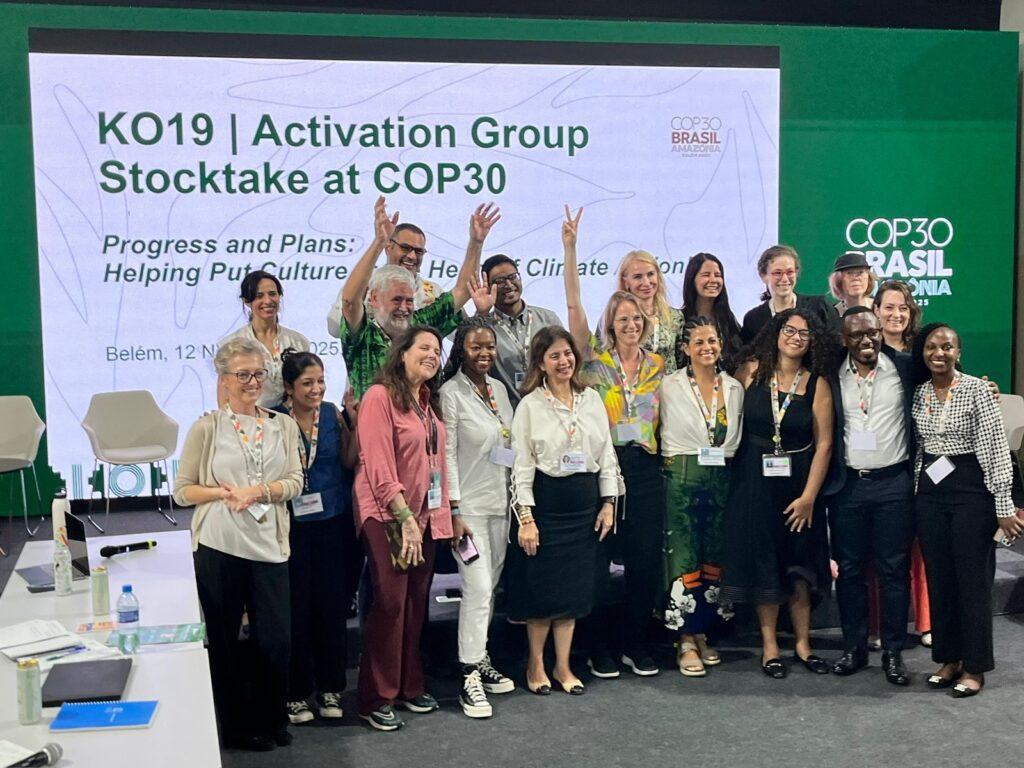
The COP30 Presidency and the Climate High Level Champions unveiled at COP30 anewActionAgenda as a unified engine for implementation of the Paris Agreement, gathering 30ActivationGroups (including AG19: Culture, cultural heritage protection and climate action) and over 100
Plans to Accelerate Solutions (PASs) to accelerate and scale up climate solutions. The Steering Group is proud that the Heritage Adapts! Campaign has been selected as one of these PASs and will work to leverage this recognition to drive adaptation action on the ground, fulfill the ambitions of the 2023 Global Stocktake, and build towards GST2 launching at COP31.
The Heritage Adapts! campaign is being coordinated by Preserving Legacies in partnership and with support from the National Geographic Society. Initial leadership partners include the Climate Heritage Network, Europa Nostra / European Heritage Hub, the Heritage Management Organization (HERITΛGE), Working Group on ‘ICH, Climate Change and the Environment’ of the ICH NGO Forum, International Council on Monuments and Sites (ICOMOS), International Federation of Library Associations and Institutions (IFLA), Julie’s Bicycle, Southeast Asian Cultural Heritage Alliance (SEACHA), and World Monuments Fund (WMF).
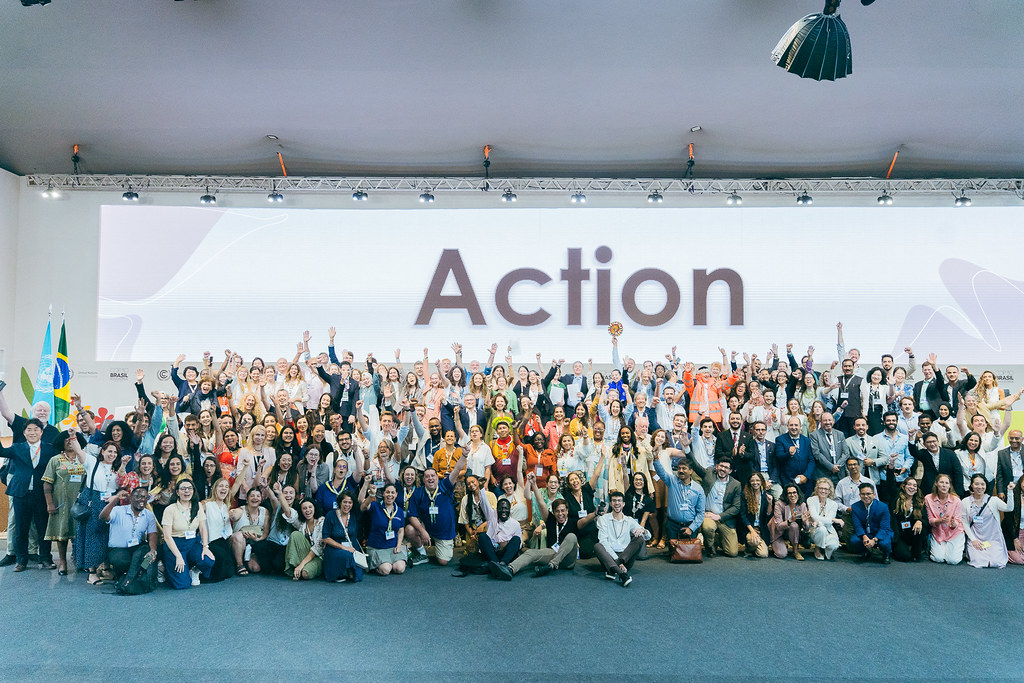
Culture and heritage advocates were well represented and mobilized at COP30, working to advance culture, heritage and climate adaptation goals. They participated in more than 42 events across the negotiations space, plenary sessions, pavilions, and Green Zone. This included the “Cultural Power for Climate Action” event on 13 November where the Heritage Adapts! 3000 x 2030 was announced by HRH Princess Dana Firas of Jordan. The Heritage Adapts! Campaign was also showcased at a Workshop on Cultural Heritage and Adaptation sponsored by the Brazil Ministry of Culture and at the Paris Committee on Capacity Building’s thematicday onCultureHeritage & Arts, which focused on bridging capacity-building gaps for culture-based climate action.
More broadly across COP30, many HACA members share the disappointment of the larger cultural and heritage community that culture was not included in the “Global Mutirão: Uniting humanity in a global mobilization against climate change” decision. This marks the first time in five years that no reference to culture or heritage was included in an overarching COP decision. In order to get on track to meeting the ambitions of the Paris Agreement, success in adaptation policy must be an anchor for embedding attention to the socio-cultural enablers of and barriers to 1.5°C climate resilience pathways across all dimensions of climate action.
Reflecting on the adaptation decision, Victoria Herrmann, Executive Director of Preserving Legacies, which serves as the secretariat of HACA and the host of the Heritage Adapts! Campaign, said:
“For the past two years, Heritage Adapts to Climate Alliance members dedicated themselves to advancing the role of culture and heritage in the Global Goal on Adaptation. Together they rose to the challenge and held the international community accountable to the promise of the GGA framework adopted at COP28. The outcomes of COP30 reflect their tireless advocacy for heritage adaptation projects to be included in climate finance and policymaking at all levels. But COP30’s progress is not enough to safeguard the thousands of places and practices that define us. Our work continues in 2026 with the launch of the Heritage Adapts! campaign and community of action to make sure every heritage place and cultural practice has a pathway to climate adaptation.”
.
RESPONSES FROM HERITAGE ADAPTS! COALITION PARTNERS AND SUPPORTERS
Billie Faircloth and Lori Ferriss, Co-Leads, Decarbonizing the Built Environment through Heritage Initiative, Executive Director and Research Director, Built Buildings Lab: “We applaud the Climate Heritage Network’s and HACA’s sustained advocacy leading to the COP30 landmark inclusion of cultural indicators in the GGA decision. The great strength of heritage-informed climate solutions lies in the inherent co-benefits they deliver. Protecting heritage not only improves resilience, but also demonstrates low-carbon approaches that are essential to climate change mitigation, strengthens community cohesion, and fosters a local, skills-based economy. We are honored to continue our collaboration with Heritage Adapts! through the Action Agenda to bring culture and heritage to the heart of climate action.”
Dr Cristina Garzillo Leemhuis, European Heritage Hub partner, Head of Socio-Cultural Transformations, ICLEI Europe: “Our thanks go to Heritage Adapts! for strongly advocating the essential contribution of culture and cultural heritage to climate adaptation. Local and regional leaders, planners, and policymakers are being urged more than ever to embed culture and heritage in their adaptation strategies. The inclusion of cultural indicators in the GGA decision underscores that only through the integration of culture and heritage at all levels can inclusive climate action and a sustainable future be achieved.”
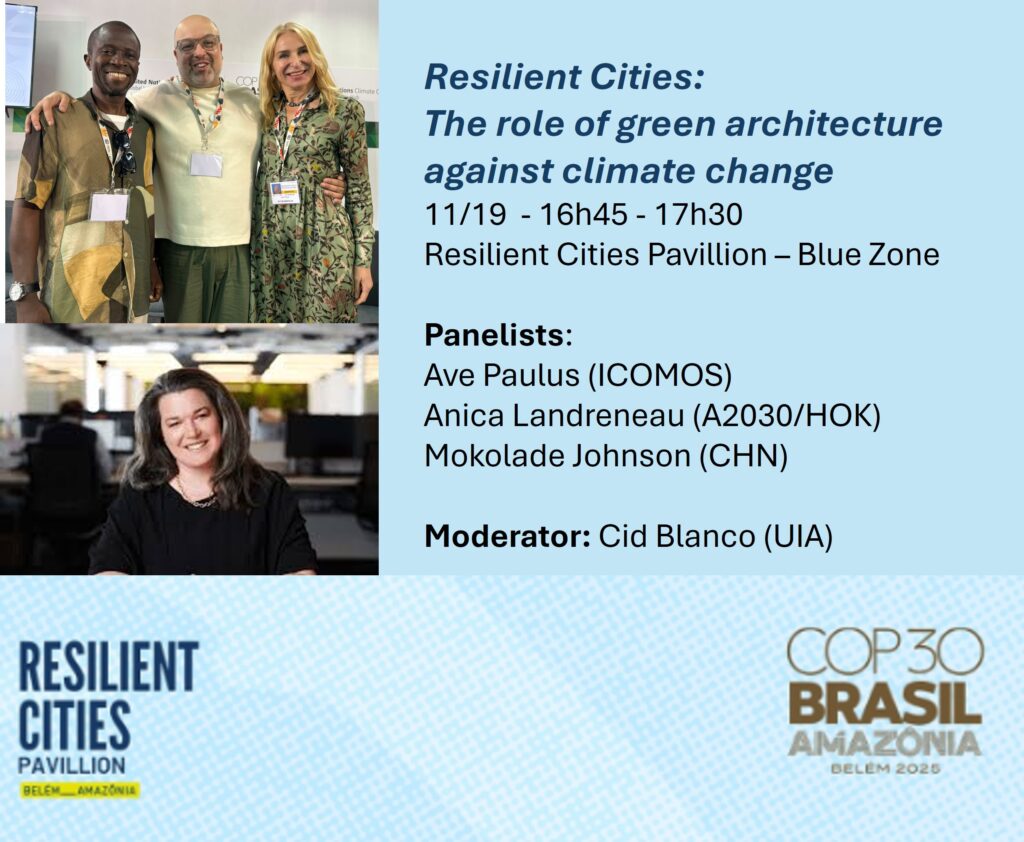
Dr. Mokolade Johnson, CHN Decarbonizing the Built Environment Through Heritage Initiative Africa Lead; Co-Chair and Coordinator, Architecture & Urbanism Research Hub- University of Lagos, Nigeria: “We congratulate HACA for its coordination efforts to push ahead this agenda. The inclusion of Culture and Heritage is a heartwarming development, offering hope that initiatives such as the decarbonization voice will empower native custodians to actively implement sustainable results. A+URH-University of Lagos appreciates the encouragement and leadership that HACA and Architecture 2030 continues to provide for these achievements. The strength and success of the fluid indicators and negotiations will depend on their ability to deliver tangible gains for stakeholders working in communities that remain underheard and underserved. Strategic partnerships at every stage will hopefully provide success pathways for culture, heritage and GGA as we move towards Turkiye COP31 and beyond.”
Susan Kamenar, Preserving Legacies: “COP30 marked a milestone for heritage. From Preserving Legacies being honored as the Global Center on Adaptation’s Local Adaptation Champion for Citizen Science to heritage being elevated within the Action Agenda and the Global Goal on Adaptation, this COP underscored the growing recognition that heritage is essential to effective and equitable climate action. We are immensely proud of our team and partners, who work tirelessly to support custodians around the world in locally led heritage adaptation and to champion heritage on the global stage. Building on COP30’s momentum, we’re excited to scale our impact through the Heritage Adapts! 3000 × 2030 campaign and welcome its recognition as a Plan to Accelerate Solution, which will help us to ensure that heritage is safeguarded as a source of resilience for communities worldwide.”
Sharon Memis, Secretary General, IFLA: “COP30’s achievement of embedding culture and heritage across all dimensions of adaptation is a testament to the culture sector’s commitment to just and equitable solutions. IFLA welcomes the inclusion of movable heritage in indicators for target 9(e). Libraries safeguard heritage, history, and collective memory – and create spaces for knowledge and community. Through the Heritage Adapts! Campaign, we look forward to unlocking libraries’ capacity to strengthen resilience for themselves and the communities they serve.”
Simon Musasizi, Co-Chair, Climate Heritage Network Africa and the Arab State Region/The Cross Cultural Foundation of Uganda: “We are excited that UNFCCC is steadily recognizing the vital role of cultural heritage in adaptation and are proud to see heritage-centric initiatives on the action agenda, which align with the GCA’s call for increased ambition to protect cultural heritage and offer concrete ways to achieve that.”
Ave Paulus, Focal Point, Climate Action Working Group, ICOMOS: “Heritage Adapts campaign showcases the power of heritage to adapt – from every single heritage community and place to a global coalition of heritage people and organisations. ICOMOS is continuing to support and act within the Heritage Adapts! coalition and Climate Heritage Network for culture- and heritage-based climate action. During COP30, we have felt the strength and potential of united cultural voices in Blue zone and Green zone; we do believe the importance of culture will be fully acknowledged in the global climate action policy documents and at negotiation tables.”
Andrew Potts, Coordinator, Heritage Adapts to Climate Alliance/Preserving Legacies: “The progress made in Belem on adaptation is the result of sustained advocacy over many years by many people to bring parity to adaptation in climate policy and to culture in adaptation policy. We thank the COP26, COP27, COP28, COP29 and COP30 Presidencies for their roles in progressing the Global Goal on Adaptation to this point and I warmly congratulate the member organizations of the Climate Heritage Network and my colleagues in the Heritage Adapts to Climate Alliance for their dogged work year after year to make sure culture and heritage were included and retained in every GGA draft, at every step, at every COP.”
Alison Tickell, Director, Julie’s Bicycle (JB): “Congratulations to the HACA team and communities for the relentless advocacy of cultural practice that contributes to adaptation, community resilience and integrity. JB is thrilled to help take this work forward as a partner in the new Heritage Adapts! 3000 x 2030 campaign. Whilst there was no reference in the COP30 final text to culture, the GGA stands as a beacon for culture as a whole, the anchor that will immeasurably strengthen adaptation, and also illuminate culture’s transversal relevance to climate action generally.”
Dr. Meredith Wiggins, Senior Director of Climate Adaptation, World Monuments Fund: “The solidarity, unity, and single-mindedness of the culture and heritage sector at COP this year has been an inspiration. Culture is the missing element in climate action, and the GGA’s inclusion of heritage indicators represents a new entry point into adaptation policy and adaptation finance for experts and communities alike. WMF is grateful for HACA’s leadership, and we look forward to working as part of the Heritage Adapts! Coalition and our local partners to scale adaptation efforts, with the aim of providing feedback for SB64 and attending COP31 with measurable progress to report.”
-end-
CONTACT
For media inquiries, please contact:
Susan Kamener, Director, Marketing and Communications
HACARecommendations on Culture and Heritage-Related Indicators for Climate Change Adaptation (2025)
NOTE TO EDITORS
About Preserving Legacies
Preserving Legacies envisions a world where communities lead climate adaptation, safeguarding heritage and redefining resilience to build a more just and thriving future. The Preserving Legacies mission is to support local change makers with training, tools, and connections to equitably adapt their community’s heritage places and practices from the impacts of climate change. Each year, Preserving Legacies accepts 10-12 heritage places into its flagship three-year climate adaptation cohort program. For more information, please visit: https://www.heritageadapts.org/
About Climate Heritage Network
The Climate Heritage Network (CHN) is a voluntary, mutual support network of government agencies, NGOs, universities, businesses, and other organizations committed to tackling climate change and achieving the ambitions of the Paris Agreement. Mobilized in 2018 during the Global Climate Action Summit and launched in 2019, the Climate Heritage Network works to re-orient climate policy, planning, and action at all levels to account for dimensions of culture – from arts to heritage. For more information, please visit: https://www.climateheritage.org/
About Europa Nostra / European Heritage Hub
The European Heritage Hub, funded by the EU and led by Europa Nostra, champions the vital role of culture and cultural heritage in addressing climate adaptation. By utilizing the wealth of traditional knowledge, practices, and techniques embedded in heritage, it offers sustainable solutions to bolster community resilience. To ensure meaningful action, planners and policymakers are urged to incorporate culture and heritage into adaptation strategies across all levels. Through its dedicated network, the European Heritage Hub is committed to securing 50 pledges from heritage sites and cultural practices, fostering a collective effort towards a sustainable future. For more information, please visit: https://www.europeanheritagehub.eu/About the Heritage Management Organization
The Heritage Management Organization (HERITΛGE) was established in 2008 with the goal of enabling key heritage managers, through targeted training, to independently transform heritage assets from decaying objects of study to dynamic sources of learning, community identity and economic development. The Heritage Management Organization trains professionals in the management of heritage sites, independently of project specifics. Training practitioners in the essential skills and best practices which define heritage management is at the heart of the HERITΛGE mission. Since its founding HERITΛGE has trained thousands of current and future heritage managers in most countries around the world and is now on course to impact a quarter of global heritage hotspots by the year 2025. For more information, please visit:
The ICH NGO Forum, founded in 2009, represents more than 260 NGOs from over 70 countries accredited under the 2003 UNESCO Convention for the Safeguarding of the Intangible Cultural Heritage. It brings extensive, and diverse ICH safeguarding expertise from civil societies, positioning it strategically to advise the Intergovernmental Committee of the Convention, and other stakeholders. The Working Group of the ICH NGO Forum on ‘ICH, Climate Change and the Environment’, works towards establishing and strengthening the vital role of Intangible Cultural
About International Council on Monuments and Sites (ICOMOS)
ICOMOS is the only world-wide non-governmental expert organisation of its kind dedicated to promoting theory, methodology, and technology applied to the conservation, protection, and presentation of monuments and sites. With more than 12,000 members in 130 countries from a diverse range of backgrounds, including architects, heritage conservationists, anthropologists, archaeologists, historians, geographers, and planners, ICOMOS is ideally positioned to respond to global challenges such as climate change with all its expertise. ICOMOS is a strong partner to UNESCO as an advisory body of the World Heritage Convention. ICOMOS is actively involved in international and regional climate policies. ICOMOS is an observer of UNFCCC and G20, ICOMOS CAWG members are among the experts for the IPCC AR7 report. For more information, please visit: https://www.icomos.org/
About International Federation of Library Associations (IFLA)
With over 1600 members in nearly 150 countries, IFLA is the global voice of libraries. For nearly 100 years, IFLA has represented the interest of the library sector, bringing together professionals from around the world to promote high standards of delivery of library and information services and professional practice. IFLA is a partner of UNESCO, advancing the accessibility, protection, and preservation of documentary cultural heritage, and advocating for the value and importance of high quality library and information services in the public, private and voluntary sectors. IFLA is an observer of the UNFCCC, WIPO, and UN Economic and Social Council. Through its vibrant professional programme and partnerships, IFLA seeks to strengthen the sustainability of the library field as well as their role in delivering international sustainable development goals. For more information, please visit: https://www.ifla.org/
About Julie’s Bicycle
Julie’s Bicycle is a UK based not-for-profit, mobilising the arts and culture to take action on the climate, nature and justice crisis. Founded by the music industry in 2007 and now working across the arts and culture internationally, JB combines cultural and environmental expertise to deliver high-impact programmes, learning and resources whilst advocating for culture and climate policy alignment commensurate with the climate crisis. For more information, please visit: https://juliesbicycle.com/
About Southeast Asian Cultural Heritage Alliance
SEACHA aims to promote effective government-community partnership in cultural heritage management in Southeast Asia, to strengthen the ASEAN Socio-Cultural Community as a people-centered third pillar of ASEAN and serve both as a networking forum between ASEAN member organisations, with an aim to be a dialogue partner of ASEAN governments and the ASEAN secretariat further. For more information, please visit: https://seacha.org/
About World Monuments Fund
World Monuments Fund (WMF) safeguards the world’s most treasured places to enrich people’s lives and build mutual understanding across cultures and communities. Since 1965, our global team of experts has preserved the world’s diverse cultural heritage using the highest international standards across more than 700 sites in 112 countries. Partnering with local communities, funders, and governments, WMF draws on heritage to address some of today’s most pressing challenges: climate change, underrepresentation, imbalanced tourism, and post-conflict recovery. With a commitment to the people who bring places to life, WMF embraces the potential of the past to create a more resilient and inclusive society.For more information, please visit: https://www.wmf.org/
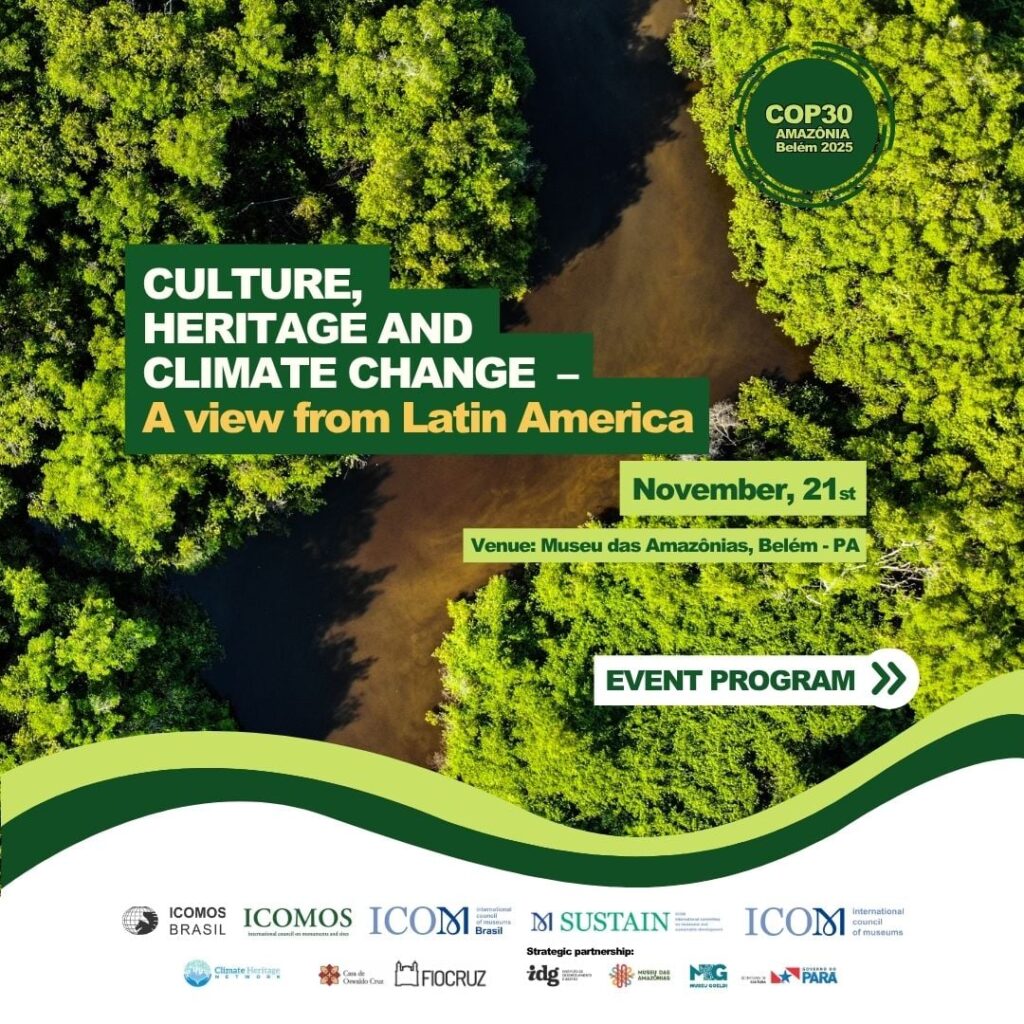
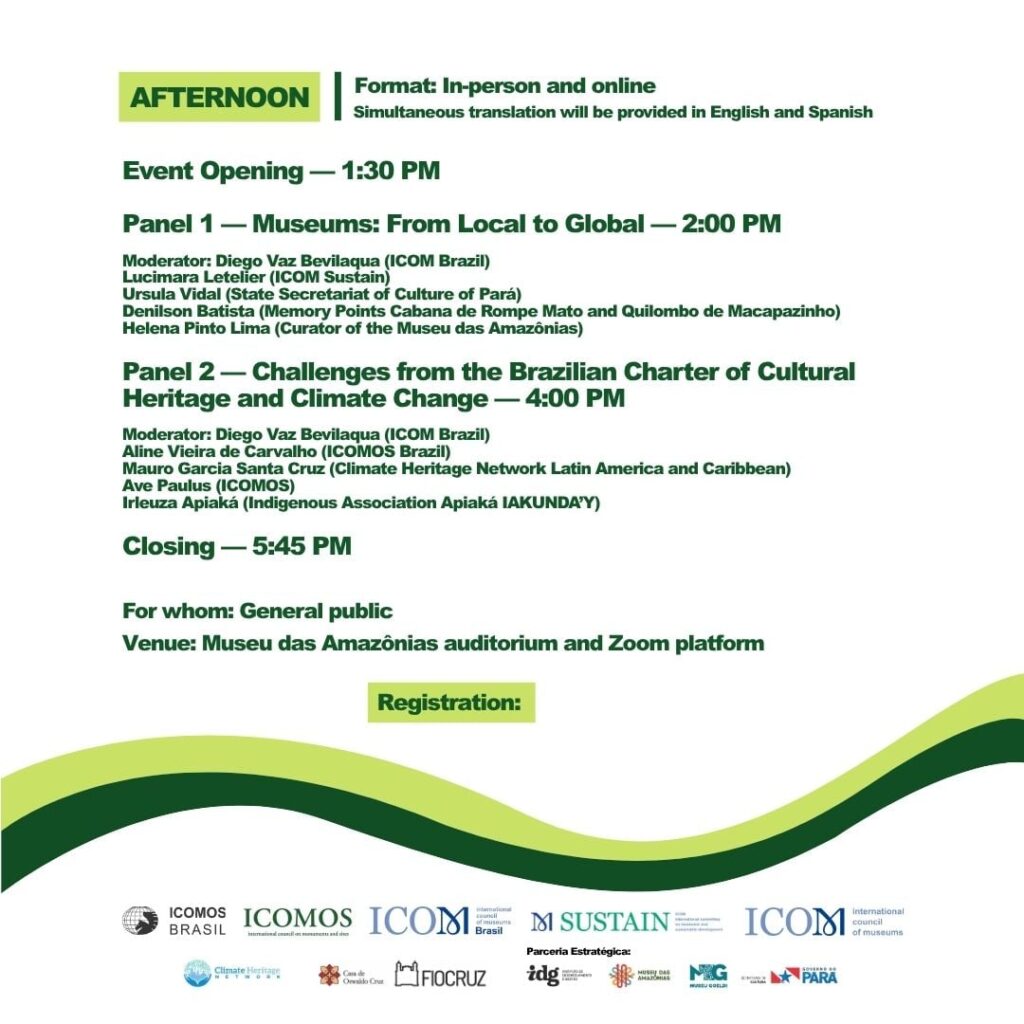
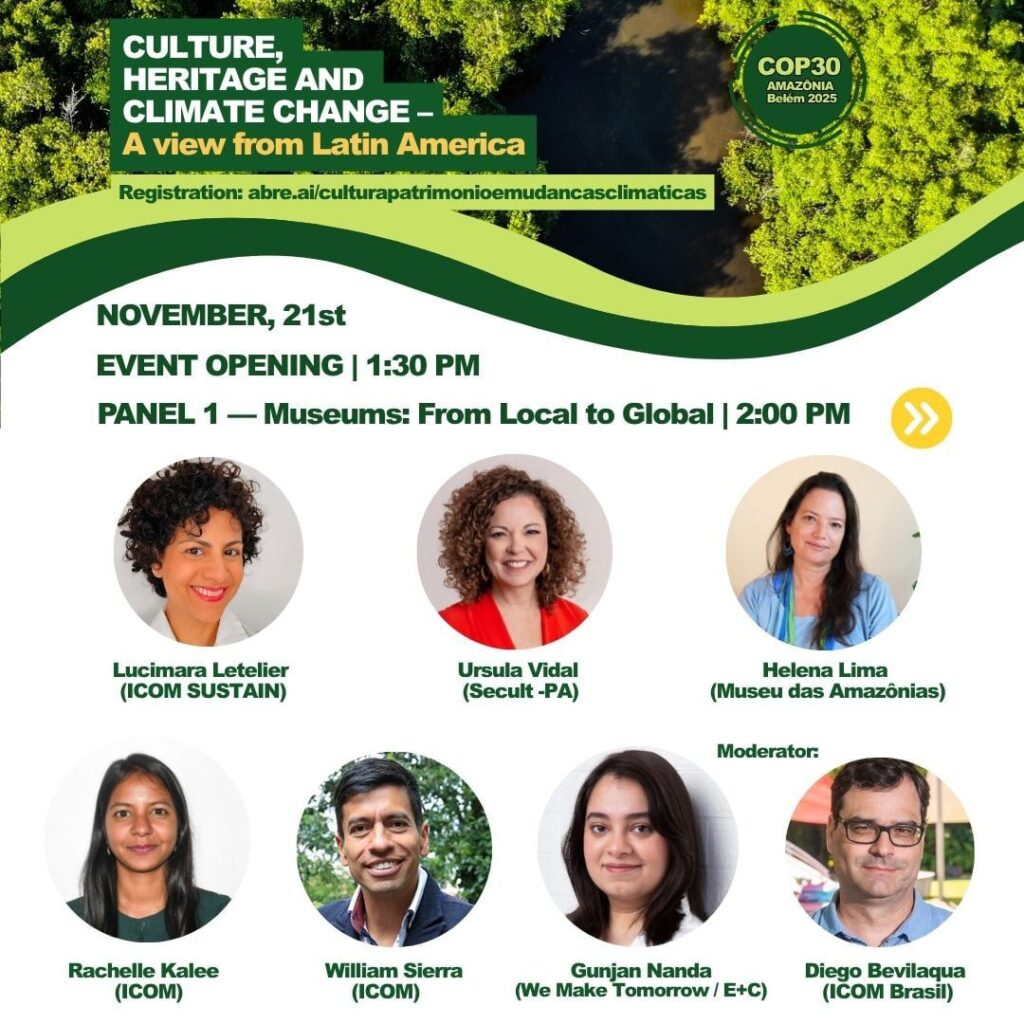
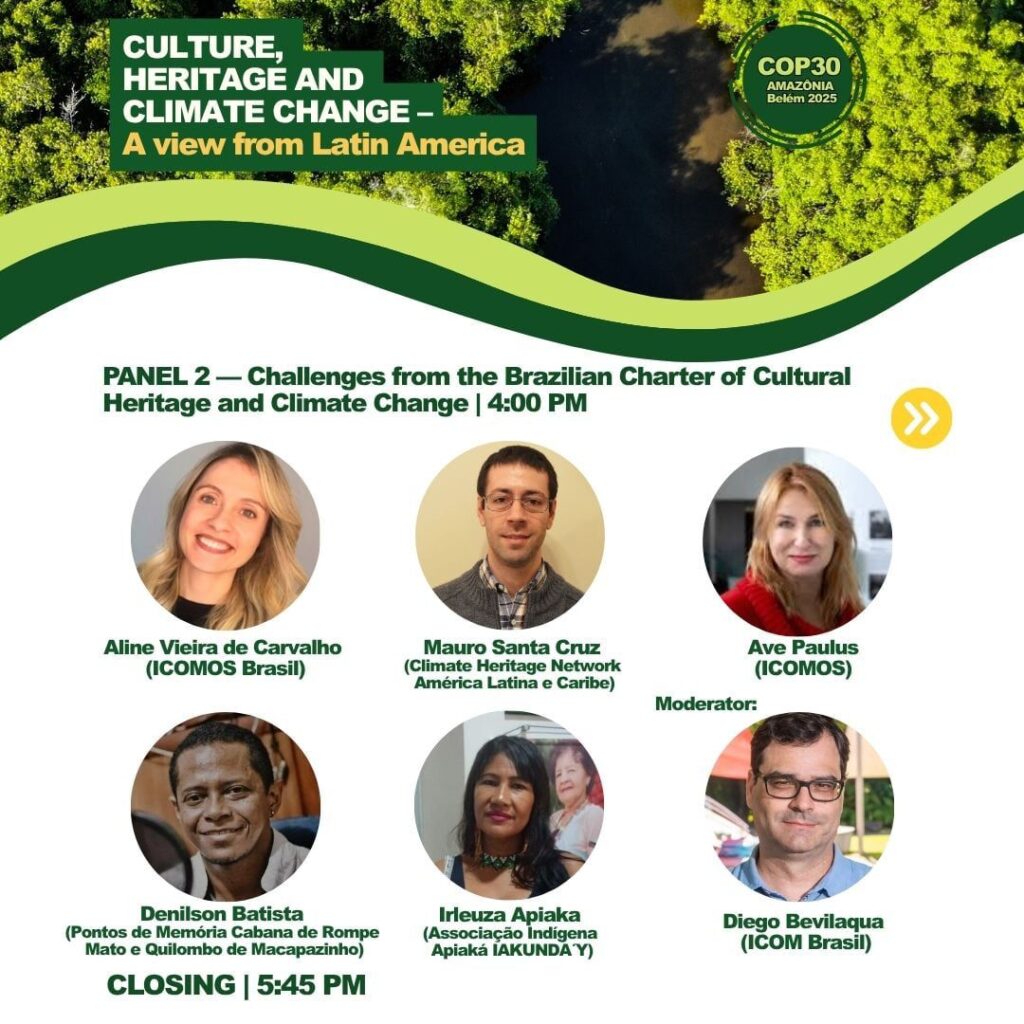
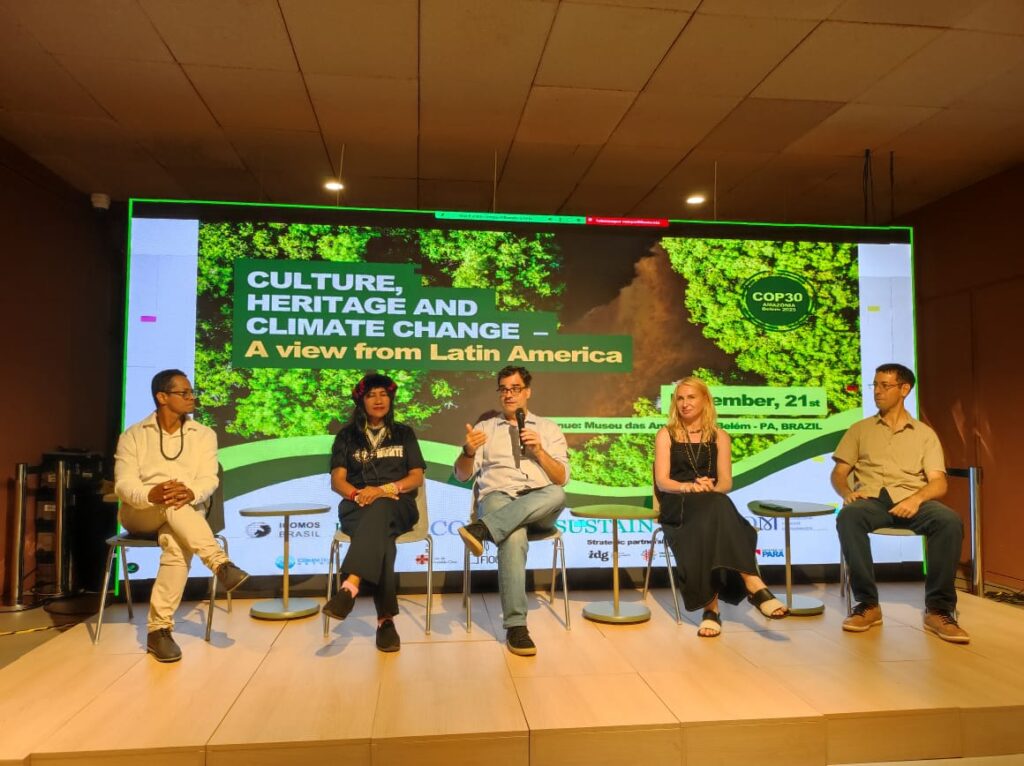
We would like to invite everyone to the event this Friday, 21 November, from 1:30 PM to 6:00 PM Join us!!!!! Amazon Museum, Belém CULTURE, Heritage and Climate Change If you are not in Belém, we warmly invite you to join us online. Access link: https://us06web.zoom.us/meeting/register/SwSty-0lSOSAy2Au43fdew
👉🏽 This event is organized by ICOM, ICOM Brazil, ICOM SUSTAIN, ICOMOS, ICOMOS Brazil, the Climate Heritage Network, and Casa de Oswaldo Cruz (COC/Fiocruz), in partnership with the Museu das Amazônias – State Secretariat of Culture of Pará (Secult-PA) / IDG and the Museu Paraense Emílio Goeldi.
ICOMOS, Architecture 2030 and CHN are speaking at Culture and Entertainment pavilion about the potential of heritage based solution in the built environment on 20.11 at 13.00-14.00. Among the speakers are Mauro Gabriel (ICOMOS, CHN, Argentina), Ave Paulus (ICOMOS, CHN, Estonia), Cid Blanco (Architecture 2030, CHN, Brasil)
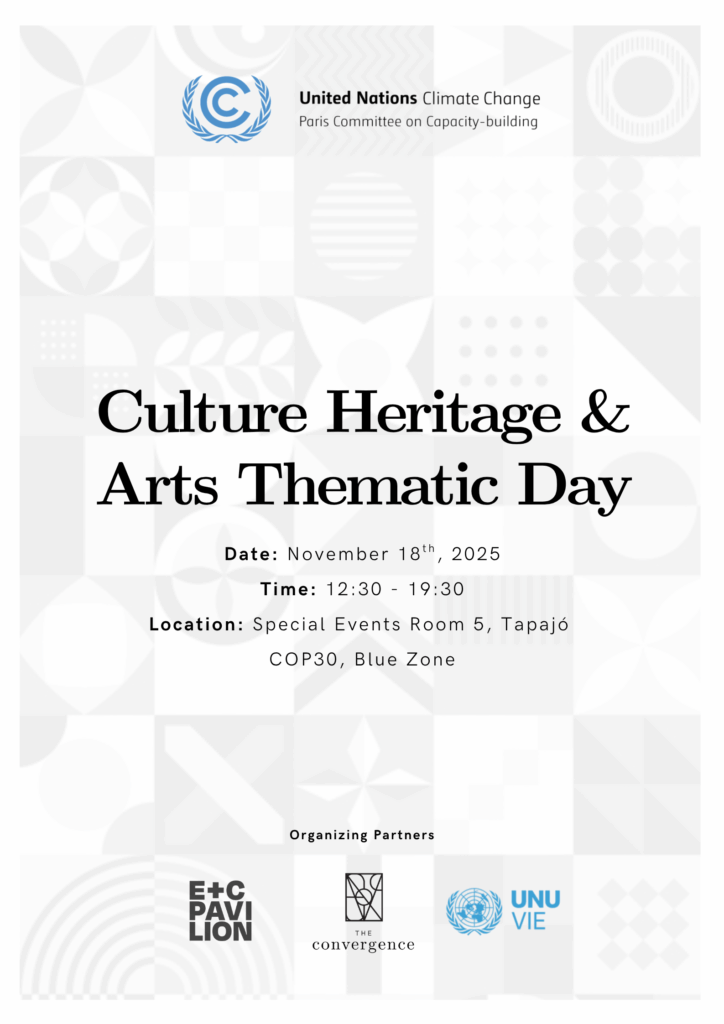
United Nations Paris Committee on Capacity Building’s thematic day on Culture Heritage & Arts. The day will feature programming focused on bridging capacity-building gaps for Culture-Based Climate Action.
Date: November 18th Time: 12:30 – 19:30 Location: COP30, Capacity Building Hub Room: Special Events Room 5, Tapajó
Opening Keynote (12:30-12:45) – Vinícius Gürtler, Co-Chair of the Group of Friends for Culture-Based Climate Action, Ministry of Culture, Brazil
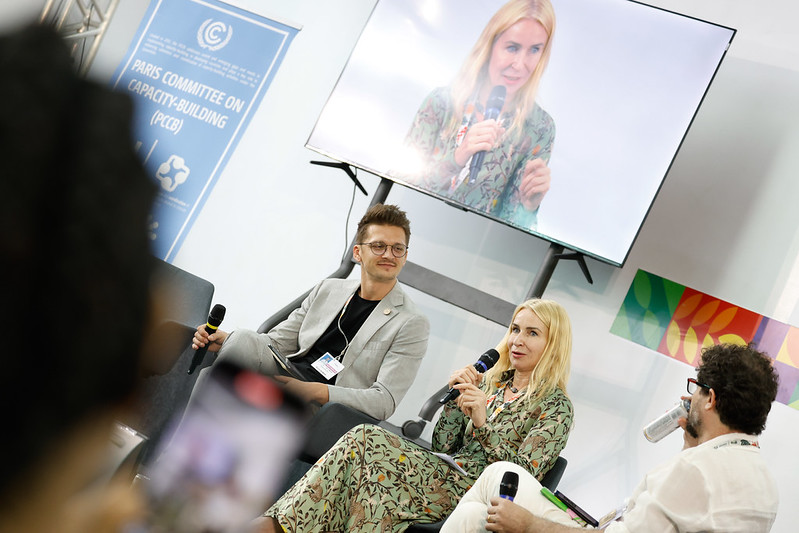
Session 1: Building capacity through Policy for culture-based climate action (12:30–13:45) The session explores how cultural heritage and the creative sector can be systematically integrated into climate policies and action plans. – Carlos Paiva – Ministry of Culture, Brazil – Malini Mehra – London Climate Action Week Founder – Ave Paulus ICOMOS, Climate Action WG Focal Point Moderated by: Daniel Cervenka (The Convergence/Resolve Global)
Session 2: Designing capacity for culture-based climate action (14:00-15:15) The session convenes experts for an open dialogue on how culture can drive systemic climate solutions.
Session 3: CB Academy – Weaving climate stories for a more resilient future (15:30–17:00) Hosted by: United Nations University – Institute for Environment and Human Security (UNU-EHS) This session for the Cultural Heritage and Arts Day blends storytelling, multimedia, and diverse voices to share climate concerns using the Sentipensar method.
Session 4: Pitch Perfect: Culture-based Climate Solutions(17:15–18:00) Hosted by: Paris Committee on Capacity Building Participants will have the opportunity to pitch their capacity-building project or solution to a jury panel composed of a communications expert, a technical expert, a financier, and a political representative.
ICOMOS supports Culture-based Climate Action at the UNFCCC, emphasising cultural heritage as a thematic target for measuring progress towards the Global Goal for Adaptation. ICOMOS supports the COP 30 Presidency on the Action Agenda Axis 5, Key Objective 19 – Culture, Cultural Heritage and Climate Action. We take part in providing and accelerating solutions related to cultural heritage. ICOMOS continues to build capacities to protect cultural heritage from climate-related risks, as well as showcase cultural heritage-based solutions in adaptation, mitigation, resilience, and behavioural change. ICOMOS is part of three plans to accelerate solutions (PAS) – Accelerating the Role of Culural Heirtage in National Adaptation Plans, Heritage Adapts campaign and Heritage Now campaign, introduced on 15.11 at the COP30 action room 5 at 14.00-15.00, blue zone
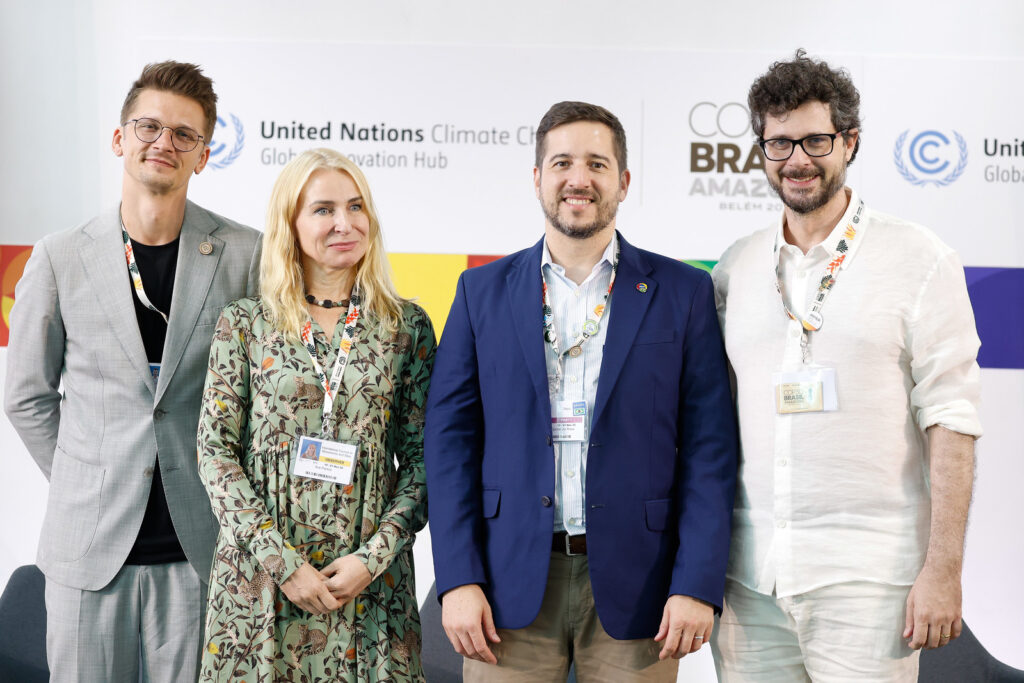
Ave Paulus, Focal Point of ICOMOS and Suan Kamenar, Preserving Legacies “ As the COP of truth, we know that we are not meeting the targets set forth in the Paris Agreement and we must start serious adaptation implementation now. If we don’t we will continue to loose our lives and destroy livelihoods at accelerating rates. Heritage sector knows – communities with a strong connection to their heritage are more resilient in times of change. We are glad the GGA has recognized the vital role of heritage in adaptation and are proud to see heritage-centric initiatives on the Action Agenda which align with the GGA’s call for increased ambition to protect cultural heritage and offer concrete measurable ways to achieve that.Culture, heritage and communities don’t just define, connect, and inspire us; it is the very roots of our resilience and a repository of solutions. We must preserve and adapt heritage to enhance community resilience and to see effective adaptation solutions across sectors. For example, the built environment contributes 40% of global emissions. Heritage buildings and landscapes are a rich source of solutions that are rooted in traditional and local knowledge, support rich local culture, and build in thousands of years of human adapting to the climate. Cross-sectoral and multi-level efforts to accelerate Cultural Heritage in Climate Policy and Cultural Heritage Based solutions in climate action is the only way to respond to the climate crisis in an equitable and just way.”
Heritage-BAsed plans to accelerate solutions were acknowledged in COP30 by the COP30 presidency. ICOMOS CAWG supported PAS Heritage Adapts and Heritage Now Campaign as well as GFCBCA in several events and meetings throughout COP30, including the final joint letter of all the PAS to the Presidency.
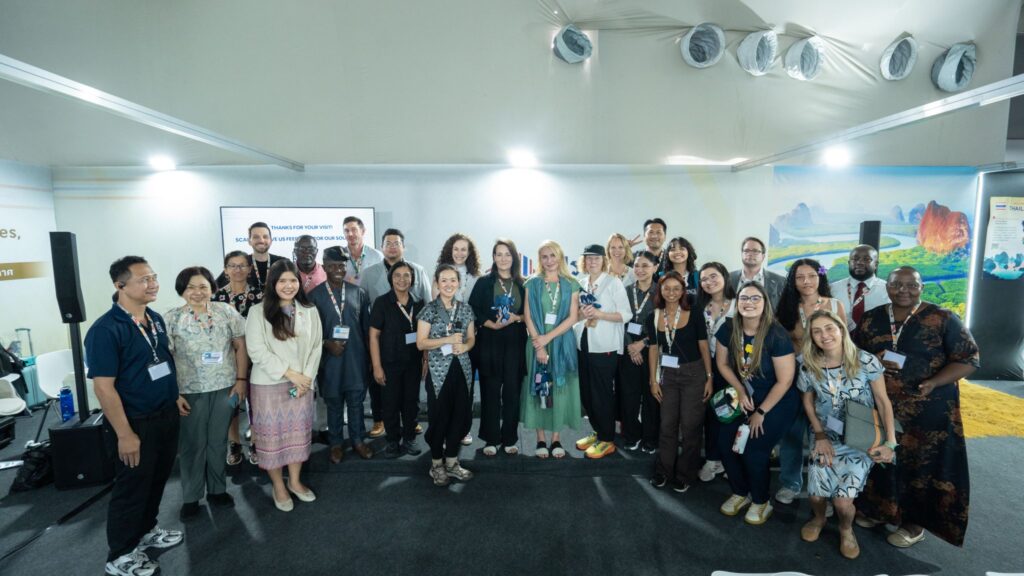
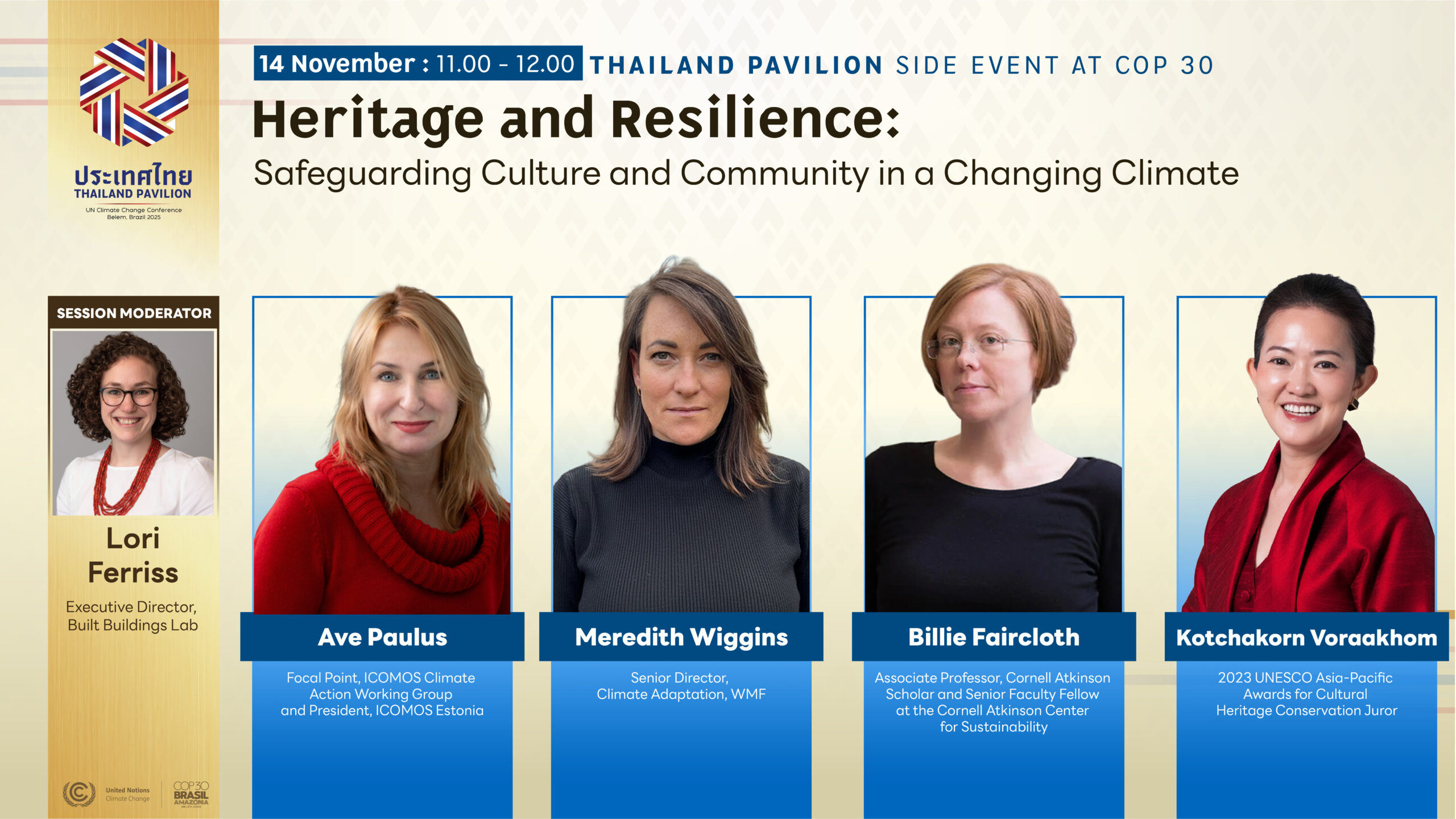
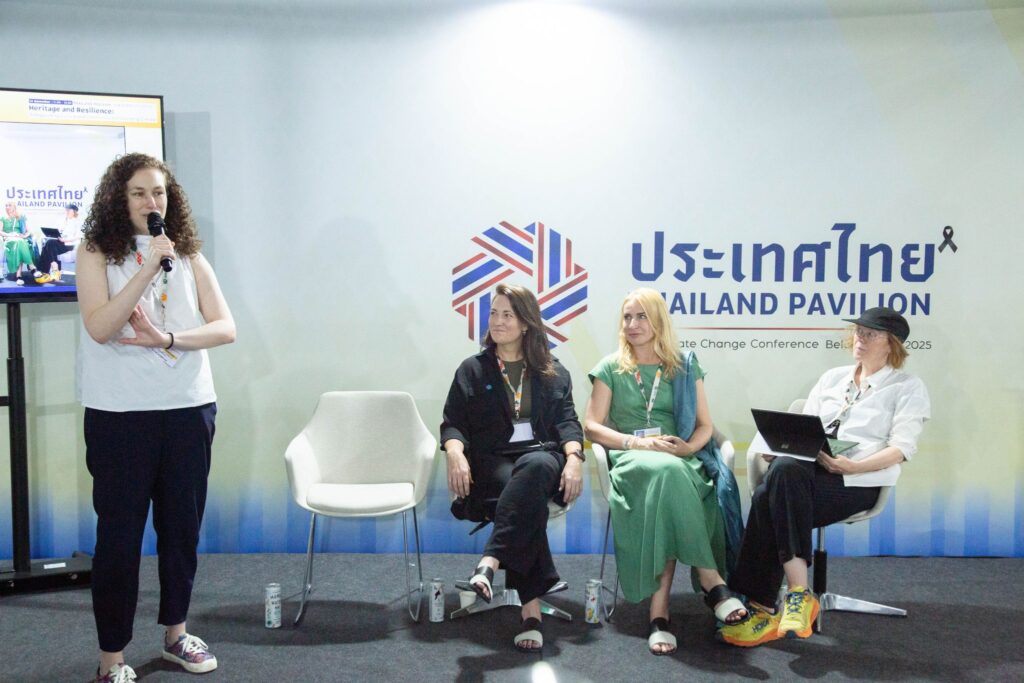
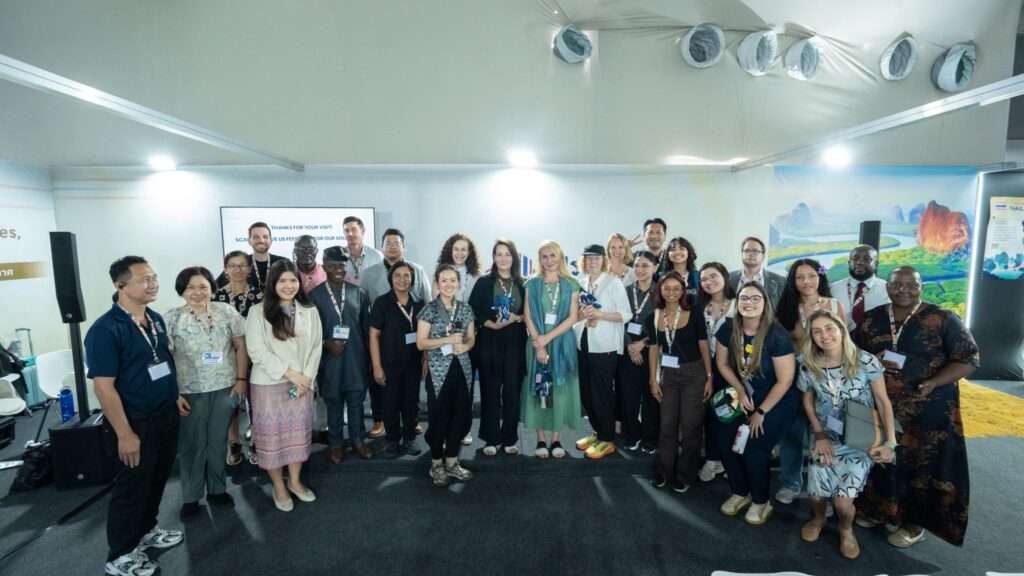
14 November 2025, 11.00-12.00, Thailand pavillion, Blue zone
Participating Organizations: Architecture 2030, World Monuments Fund, ICOMOS, Thai delegat
Session Description:
While global discussions on climate mitigation often focus on technology and infrastructure, cultural heritage offers a parallel pathway for transformation—one rooted in community, identity, and lived experience. Heritage embodies systems of knowledge, design, and stewardship that have long supported sustainable ways of living. As societies pursue energy transitions and systemic decarbonization, these cultural resources can inform more equitable and locally grounded mitigation and adaptation strategies.
Heritage and Resilience: Safeguarding Culture and Community in a Changing Climate explores how cultural heritage—both tangible and intangible—can strengthen resilience while contributing to just and inclusive climate transitions. The session brings together voices from heritage conservation, academia, and community practice to share examples of how traditional knowledge, local craftsmanship, and place-based practices intersect with modern sustainability and energy goals.
By recognizing heritage as both a source of wisdom and innovation, the discussion highlights how preserving culture can help reimagine climate solutions that honor the past while shaping a resilient, low-carbon future.
Speakers:
Welcome and moderation – Lori Ferris, Architecture2030, Climate Heritage Network
Ave Paulus, ICOMOS, ICOMOS Activities and Heritage Adapts Campaign
Meredith Wiggins, WMF, Rehabilitation of traditional water systems for urban resilience and water security
Kotchakorn Voraakhom, UNESCO Juror. Thailand Ayutthaya example
Billie Faircloth, CHN/Cornell Atkinson
News and events
ICOMOS CLIMATE ACTION WORKING GROUP WEBINAR 5.03 12-13 CEST
 For the first time in the 33 year history of the UNFCCC, culture and heritage have been operationalized in international climate policy. Following two years of tireless advocacy by HACA and building on the work of the Climate Heritage Network, which began at COP26, the
 The
The